
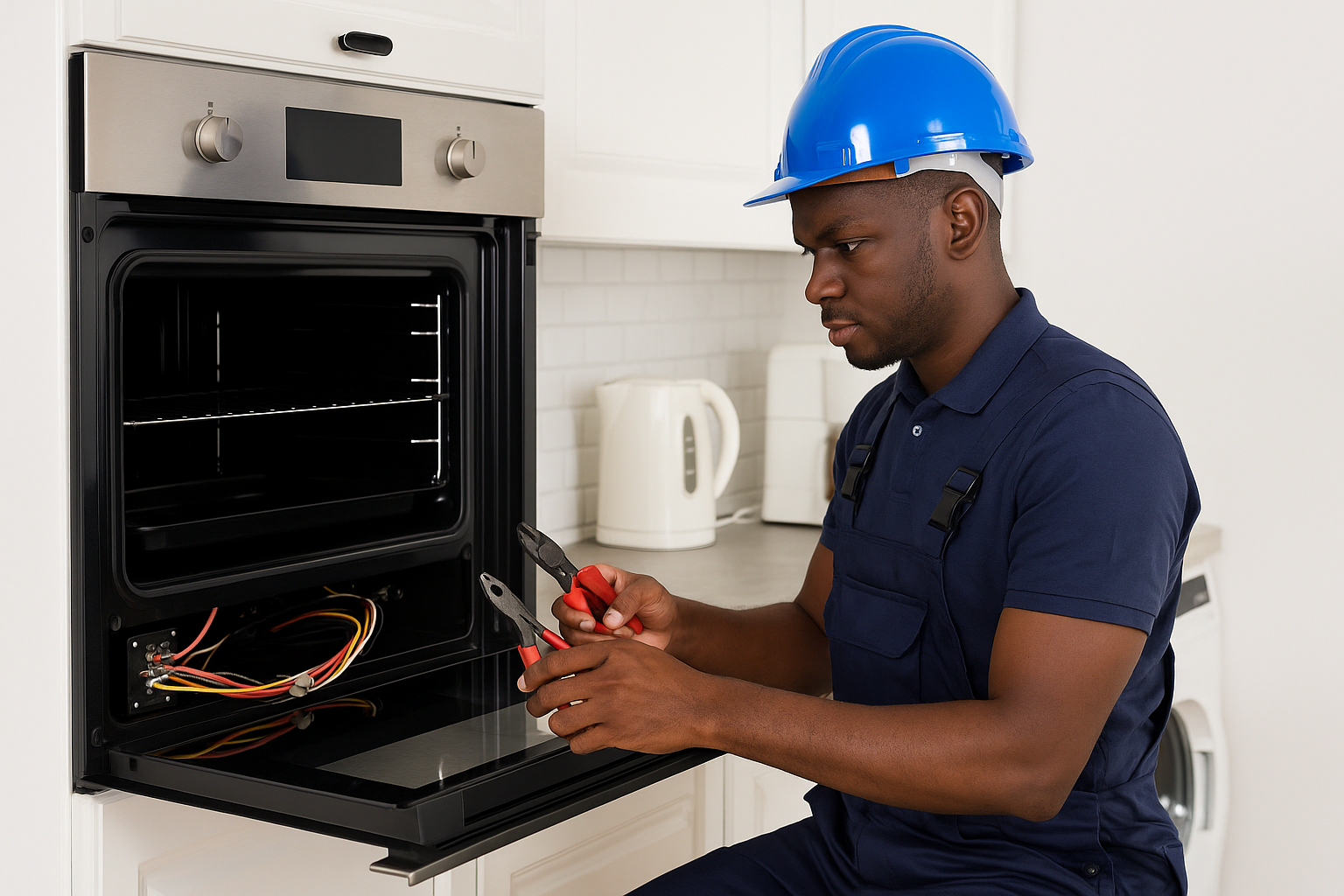
(stove/oven/hob, geyser, borehole & pool pumps, air-con wiring and more)
At Premium Electricians Zimbabwe, we install and repair dedicated circuits and appliance connections for residential, commercial, and industrial properties across Zimbabwe, including Harare, Bulawayo, Mutare, and other major towns.
High-load appliances — such as stoves, ovens, air-conditioners, geysers, pumps, and freezers — require proper wiring, protection, and isolation to prevent overloads, tripping, and electrical fires.
Our electricians size and install each circuit correctly, using high-quality breakers, RCBOs, and cabling rated for the load — so your systems run safely, efficiently, and in full compliance with ZETDC and ZERA standards.
Request an Appliance or High-Load Connection Quote
Installing a new stove, geyser, or air-conditioner? Our electricians wire and protect dedicated appliance circuits for homes and businesses across Zimbabwe. Fill in your details below and we’ll get back to you with a quote.
What we cover
Kitchen: stove/oven/hob connections, extractor fans, cooktop isolators
Hot water: electric geysers (new installs, relocations, element/thermostat wiring)
Pumps: borehole, booster and pool pumps; chlorinators; filter timers; weather-proof isolators
Cooling: split-unit air-cons (indoor/outdoor wiring), dedicated circuits, compressor surge care
Cold rooms & freezers: dedicated feeds, start surge allowance, clean isolators
Workshop gear: welders, compressors, small machinery (single- or three-phase)
Controls & protection: local isolators, correct MCB/RCBO ratings, RCD coverage where required
DB work: labelling, load balancing, surge protection (Type 1/2/3), tidy terminations
Earthing & bonding: safe routes for fault current; bonding of metal pipework, tanks and frames
Testing & documentation: insulation/continuity, loop/earth fault, RCD trip tests; CoC where needed
Why heavy loads need dedicated circuits
Big appliances draw more current—sometimes a lot more when they start. On shared circuits they cause dimming, nuisance tripping and warm cables.
A dedicated circuit with the right cable size and breaker keeps voltage steady, protects the wiring, and stops the rest of the house or shop from suffering every time the geyser or pump kicks in.
Cable sizes, breakers and RCBOs (no guesswork)
We size cables to the appliance’s real load and run length, then match the MCB or RCBO so it protects the cable without tripping for normal start surges.
Where shocks are a risk (outdoors, bathrooms, pool areas), we add RCD/RCBO protection as required. For three-phase equipment we balance phases and confirm correct rotation for motors.
Isolators you can actually reach
Every high-load circuit gets a labelled local isolator near the appliance—clear on/off for maintenance or emergencies.
For stoves and ovens we place isolators at counter height; for pumps we use weather-rated units near the plant; for air-cons we mount isolators close to the outdoor unit with tidy conduit/trunking.
Pumps: borehole, booster and pool
Pumps have strong start surges and live outdoors with dust and rain. We fit weather-rated enclosures, seal penetrations, bond metal housings, and position isolators where they won’t get soaked.
For pool systems we wire chlorinators, timers and lights neatly, and add SPDs and sound earthing so electronics survive power-return spikes.
Geysers (safe, tidy, labelled)
We run the correct-size cable to a dedicated breaker, install a proper isolator outside the bathroom or near the unit, and bond metal pipework.
If the geyser keeps tripping, we test element/thermostat wiring, check earth leakage behaviour and fix loose or overheated connections.
Air-conditioners (quiet starts, fewer trips)
Compressors pull a surge when they start. We allow for that in cable sizing and breaker choice, keep runs short and tidy, and add surge protection so control boards live longer after load-shedding returns.
We also separate neutrals in the DB to avoid “mystery” RCD trips on mixed circuits.
Cold rooms, freezers & shop equipment
Refrigeration and small industrial gear hate voltage dips. We give them clean, dedicated feeds with headroom for starting, label the isolators, and, where useful, add brownout/phase-loss protection so compressors aren’t hammered when the grid is unstable.
DB board, surge protection & earthing
Heavy loads stress weak boards. We tidy the DB, match breaker curves to the job, and add surge protection (Type 1/2/3) so electronics (oven controls, AC PCBs, pump controllers, fridges) don’t fail after ZETDC restores power.
Solid earthing & bonding helps RCDs trip properly and protects people around metalwork and wet areas.
Generators, inverters and changeover (working together)
If you have backup power, we decide which heavy loads should be on generator only (geysers, stoves) and which can live on inverter (usually not the big heat loads).
We fit a clean changeover/ATS so there’s no back-feed to ZETDC, and we set priorities so batteries aren’t flattened by accident.
Prepaid meter & inspections
We keep the meter/isolator side tidy and compliant. If the prepaid meter misbehaves, we test your installation first and guide the next steps with the utility. Clear labels and isolation points make inspections simpler.
Installation day: what to expect
We walk through your appliance list, isolate safely, and run new circuits in conduit or trunking where needed. Isolators are mounted at sensible heights, penetrations are sealed, and terminations are tight and neat.
Before we leave, we test (insulation, continuity, loop/earth fault, RCD trip), label the DB and show you which breakers feed which appliances.
Care & tips
Don’t put high-draw multi-plugs on light circuits—ask us for a dedicated point.
Keep outdoor isolators out of sprinkler paths and off the ground.
Tell us before adding a big new appliance—right sizing now avoids future nuisance trips.
If you smell hot plastic or see a discoloured cover, switch off at the isolator and WhatsApp us immediately.
Areas we cover in Zimbabwe
Harare, Bulawayo, Chitungwiza, Mutare, Gweru, Masvingo, Kwekwe, Kadoma, Chinhoyi, Marondera, Bindura, Norton, Ruwa, Nyanga, Victoria Falls—and other towns.
Request a Certified Electrician for Appliance Wiring
From kitchen stoves to borehole pumps, our electricians install and test dedicated appliance circuits safely and neatly. Complete the form below to schedule your installation or inspection anywhere in Zimbabwe.
FAQs
My stove trips the board—do I need a new stove or new wiring?
Usually new wiring and correct protection. Stoves need a dedicated circuit, the right cable size, and a properly rated breaker/isolator.
Can my air-con run on the inverter?
Small, efficient units sometimes can, but compressors are heavy at start-up. We’ll check your inverter size and battery capacity and advise what’s sensible.
Why does my borehole pump blow fuses after rain?
Moisture in joints or the motor head can cause earth faults. Weather-proof boxes, proper glands and good earthing fix most of these issues.
Do I need surge protection for appliances?
In Zimbabwe, it’s highly recommended. SPDs plus solid earthing protect control boards, fridges, freezers and ACs from power-return spikes.
Can you connect three-phase equipment?
Yes. We run the right cable sizes, balance phases, set appropriate breakers and confirm rotation for motors.
Can you issue a certificate?
Where scope requires it, we test to standards and can arrange a Compliance Certificate (CoC).
Get Safe, Dedicated Power for Your Appliances
Avoid tripping, overloads, and unsafe wiring. Our electricians install high-load circuits that meet ZETDC and ZERA standards for homes and businesses across Zimbabwe. Tell us what you need connected — we’ll handle it safely and professionally.