
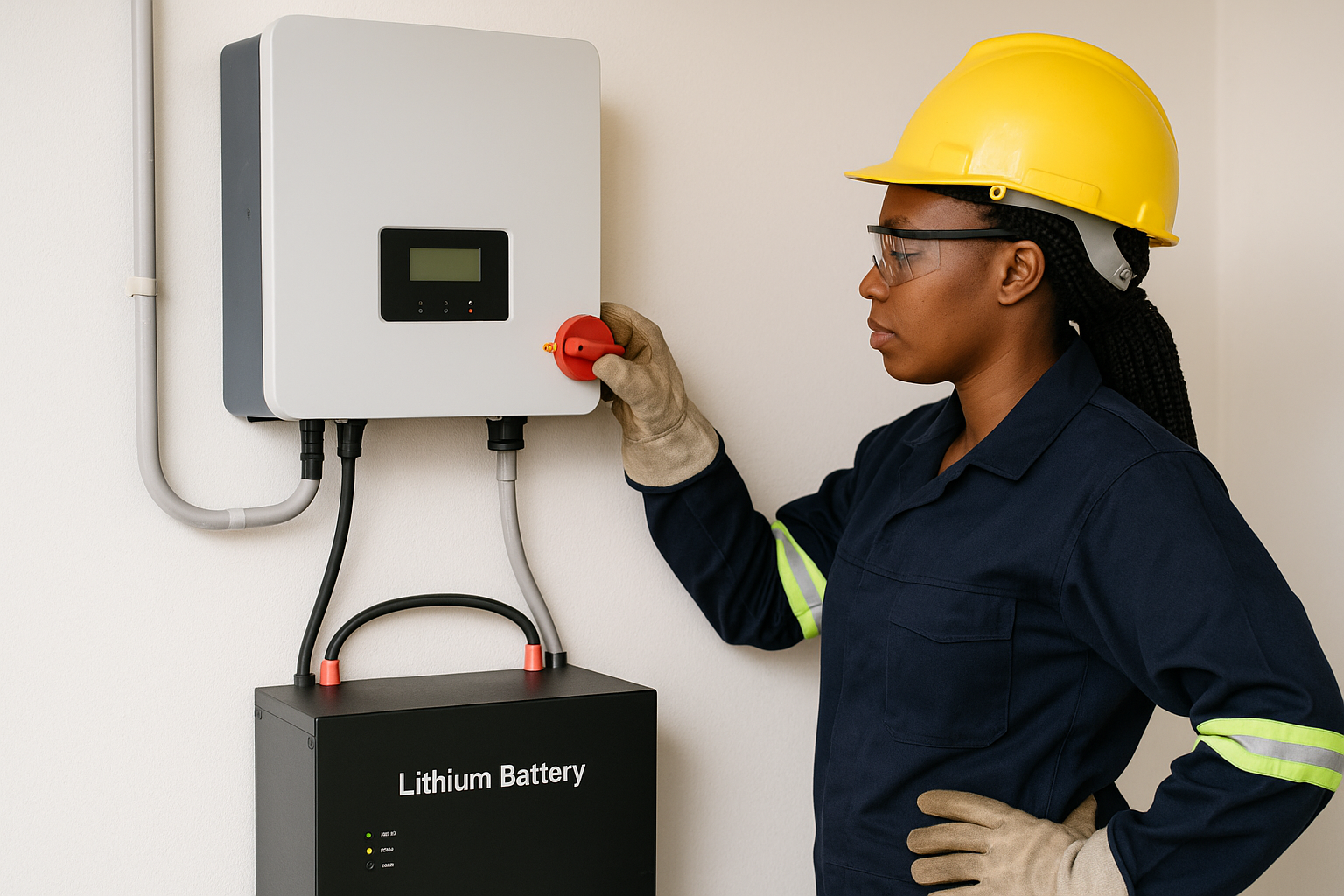
When load-shedding hits and everything stops — lights, fridge, WiFi — a properly sized inverter setup can keep your essentials running smoothly.
We help Bulawayo homes and small businesses choose and install the right inverter and battery system for their actual needs, not guesswork.
From a quiet family home in Ilanda to a small office in Bradfield or a shop in the CBD, we’ll assess what you really use — lights, TV, router, maybe a fridge — and match it with a suitable system that won’t overload or drain too fast.
That way, you can keep the basics powered without overspending on unnecessary capacity.
We install complete systems: inverter, batteries, protection, and changeover — wired cleanly into your existing DB board.
Every setup includes safe isolation from the grid, so your backup never back-feeds ZETDC or risks shocks when power returns.
If you already have an inverter but it’s not lasting through the cuts, we can test load, cables, and settings.
Often, the problem isn’t the inverter itself but wiring losses, poor earthing, or undersized batteries.
Our Bulawayo team works daily across Parklands, Kumalo, Montrose, Hillside, and surrounding areas.
We provide honest advice and practical setups that make a real difference — even during long outages.
Get Your Inverter Professionally Sized
Tell us your suburb and a short description (e.g., “need backup for lights + TV,” “current inverter not lasting”). We’ll call to suggest the right setup and estimate.
FAQs
1) What inverter size do I need for my home or office?
It depends on what you want to run during load-shedding. A small 1–3 kVA system can handle lights, WiFi, and TV; larger homes or offices might need 5 kVA+ for fridges and plugs. We’ll calculate your total load before recommending.
2) Do you supply and install or just install?
We can do both. Many clients prefer us to supply the full package — inverter, batteries, cabling, and protection — so everything matches and is installed safely. If you already have parts, we can install and test them too.
3) Can I connect my inverter to the DB board?
Yes — safely, through a proper changeover or sub-DB. We isolate it from the grid so there’s no back-feed risk. DIY plug-and-play methods are unsafe for most setups, especially during ZETDC surges.
4) How long can I expect power to last during an outage?
That depends on your usage and battery capacity. A well-sized system typically runs lights and a few devices for 4–8 hours. We can adjust runtime by recommending extra batteries or energy-saving LED lights.
5) What’s the difference between an inverter and a solar inverter?
A standard inverter only converts battery power into usable electricity. A solar inverter can also take input from solar panels to recharge batteries during the day — ideal if you plan to upgrade later.
6) How often should I service or check my system?
Once or twice a year is ideal. We’ll check terminals, earthing, cooling fans, and battery voltages. Dust and loose cables can shorten the life of your system, especially in Bulawayo’s heat and dust conditions.
Request a Quick Call-Back for Inverter Advice
Share your suburb (e.g., Hillside, Parklands, or Montrose) and what you’d like to power during load-shedding. We’ll help you size it right the first time.