
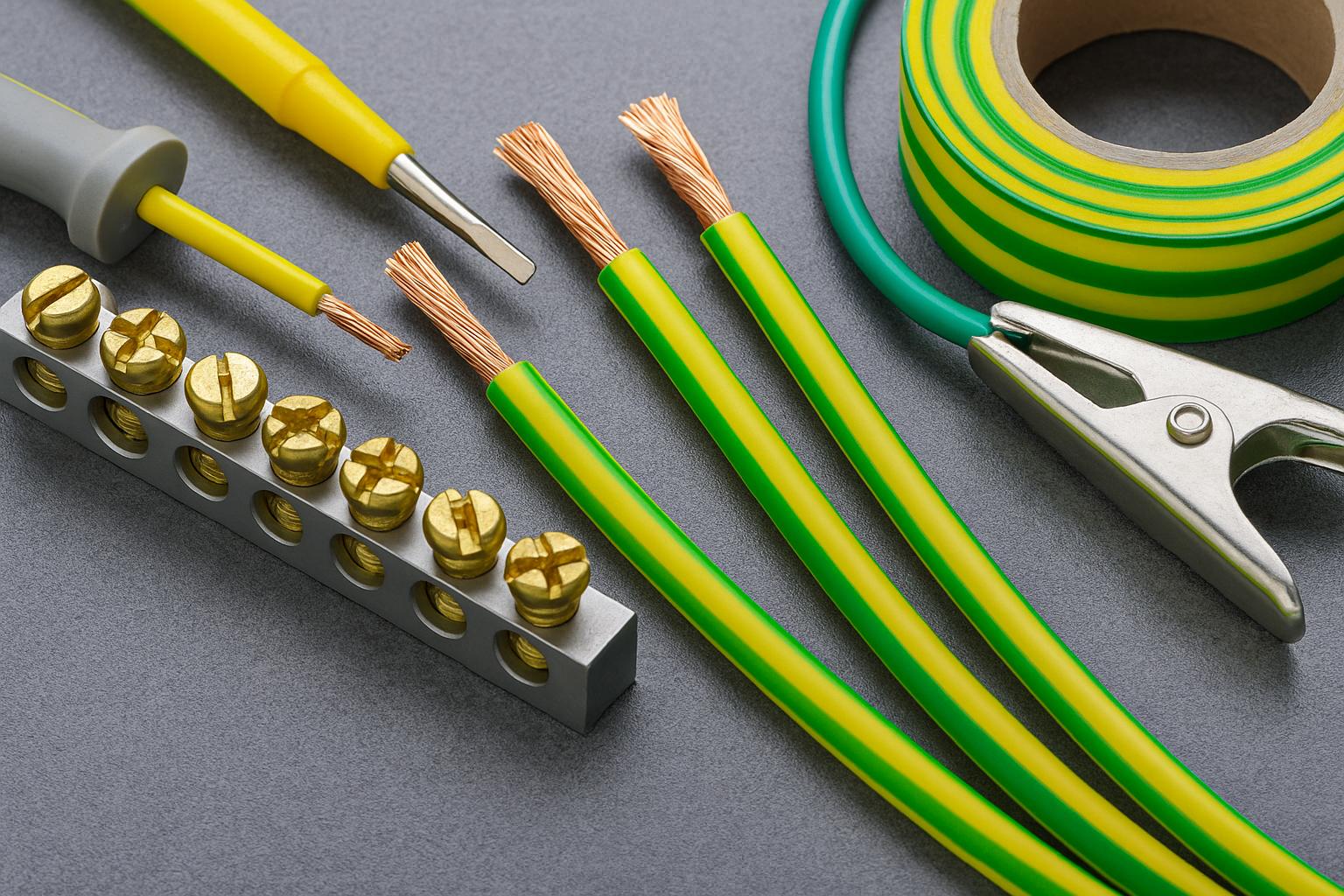
A stable electrical system starts with proper earthing. In Nyanga, where storms, surges, and unstable voltages are common, poor earthing is one of the biggest causes of shocks, tripping, and equipment damage. We test, repair, and install proper earthing and bonding for homes, shops, and lodges.
We begin by testing resistance between your DB, rods, and exposed metalwork. Many older homes in Nyamhuka and Juliasdale have corroded or broken earth wires that quietly fail over time — we find and fix them properly.
Bonding ties together metal surfaces like pipes, geysers, tanks, and gates so they share the same potential. That prevents shocks when the power fluctuates or a live wire touches a metal surface. We use solid copper conductors, corrosion-resistant rods, and correct clamps for Nyanga’s soil and moisture conditions.
If you use an inverter or generator, correct earthing is even more critical. We configure neutral-to-earth links and confirm RCDs trip correctly when powered by backup sources. It’s a small setup detail that can prevent dangerous faults later.
After testing, we label and tag earth rods with measured resistance values and issue a simple report. That’s proof your protection system actually works — not just a wire buried in the ground.
We service Inyanga CBD, Nyamhuka, Juliasdale, Claremont, Troutbeck, Montclair, and nearby lodges — helping you keep power safe and steady.
Fix My Earthing or Bonding (Nyanga)
Tell us your suburb (e.g., Inyanga CBD, Nyamhuka, Juliasdale, Claremont, Troutbeck, Montclair) and a short description (e.g., “shock on taps,” “RCD tripping,” “earth test”).
FAQs
Why does earthing matter so much in Nyanga?
Because the area gets heavy storms and voltage fluctuations. Without proper earthing, faults can cause electric shocks or fires, and surge protection won’t work effectively.
What’s the difference between earthing and bonding?
Earthing connects the electrical system to the ground; bonding joins all exposed metalwork so it stays at the same voltage. Together they protect you and your equipment.
Do I need a separate earth rod for my inverter or generator?
Yes, often. Backup sources usually need their own rod and neutral link for RCDs and surge protection to work properly. We design and test that setup safely.
How often should earthing be checked?
Every two years or after major electrical work. Nyanga’s damp climate and soil can corrode rods faster than expected.
What are the signs of poor earthing?
Electric shocks from taps or metal, flickering lights, frequent RCD trips, or equipment damage after storms. We confirm resistance readings to find and fix the cause.
Do you provide reports or test results?
Yes. We label each rod and record its resistance reading. You’ll get a short report showing your system’s condition and any recommendations.
Need an Earthing Check?
Send your suburb and a short description (e.g., “shock on geyser in Juliasdale” or “earth test in Nyamhuka”). We’ll reply with the next available inspection slot.