
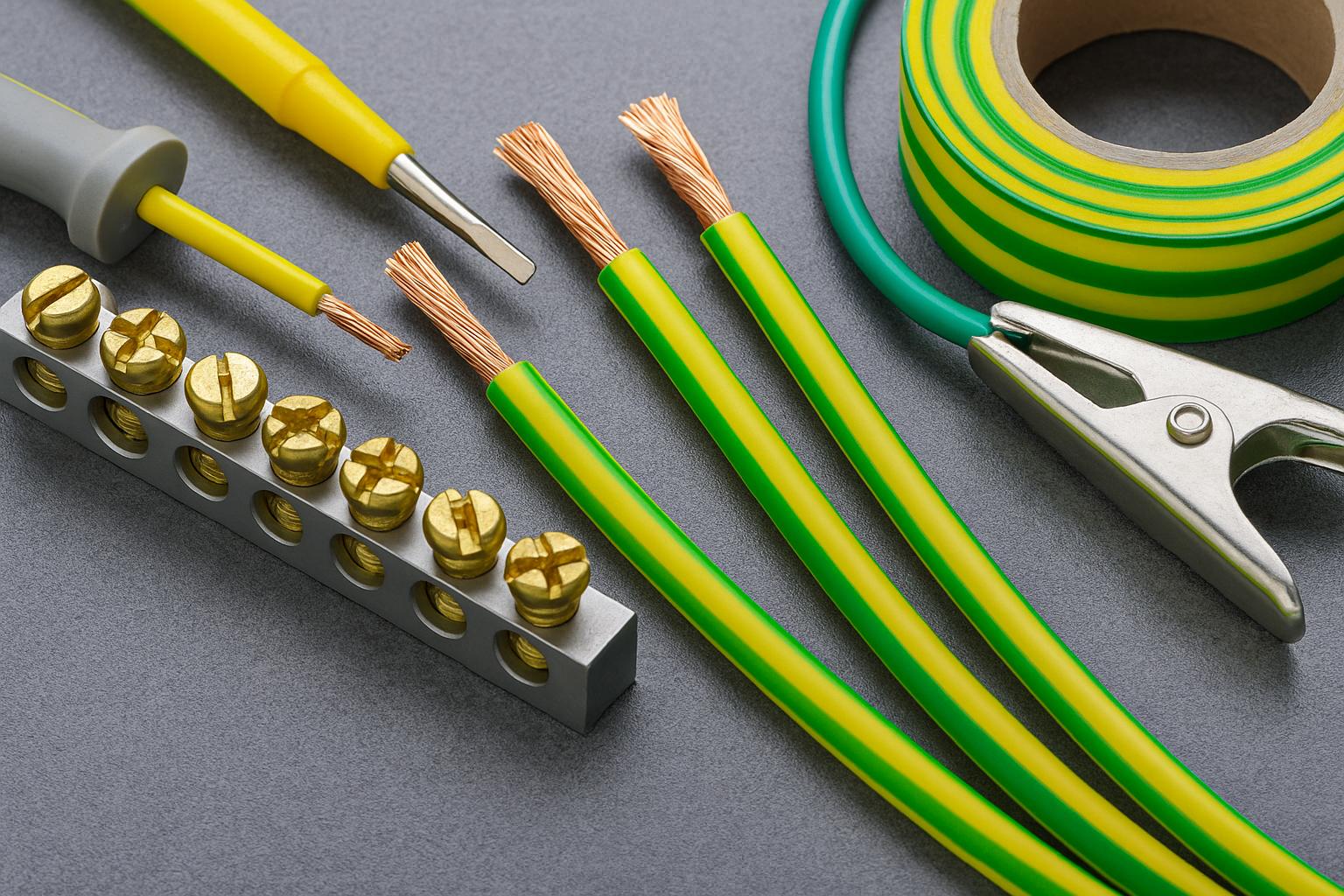
Good earthing is the foundation of every safe electrical system. In Kwekwe, where load-shedding, voltage spikes, and lightning are common, poor earthing causes more tripping, shocks, and appliance damage than people realise. We test, repair, and install proper earthing and bonding for homes, shops, and lodges.
We start with an earth resistance test and a full inspection of rods, bonding points, and cable integrity. Many older properties in Mbizo, Amaveni, and Torwood have corroded or broken earth wires buried out of sight — we locate and fix them properly.
Bonding connects all exposed metal parts — geysers, pipes, tanks, and gates — so they share the same potential. That prevents shocks when the power fluctuates or a fault occurs. We use solid copper conductors, corrosion-resistant rods, and correct clamps suited to Kwekwe’s soil.
If you use an inverter or generator, proper earthing is even more important. We configure neutral-to-earth links and verify that RCDs and surge protectors still operate correctly when running on backup power.
After testing, we label your earth rods and provide simple results showing measured resistance and any improvements needed. It’s practical, local safety that gives peace of mind during storm season.
We cover Kwekwe CBD, Mbizo, Chicago, Fitchlea, Goldridge, Torwood, Amaveni, Msasa Park, and Redcliff — safe grounding, done properly.
Fix My Earthing or Bonding (Kwekwe)
Tell us your suburb (e.g., CBD, Mbizo, Chicago, Fitchlea, Goldridge, Torwood, Amaveni, Msasa Park, Redcliff) and a short description (e.g., “shock on taps,” “earth test,” “RCD tripping”).
FAQs
Why does proper earthing matter in Kwekwe?
Because voltage spikes and lightning are common. Without good grounding, surges can damage electronics or cause shocks. Proper earthing gives faults a safe path to trip protection devices.
What’s the difference between earthing and bonding?
Earthing connects the electrical system to the ground, while bonding joins metal parts (like geysers, pipes, and gates) to the same earth. Both prevent dangerous voltage differences.
Do I need a separate earth rod for my inverter or generator?
Yes, usually. Backup power often requires its own rod and neutral link to make RCDs and surge protection work correctly. We test and configure that safely.
How often should earthing be tested?
Every two years — or after major electrical work or nearby lightning strikes. Kwekwe’s soil and moisture can corrode rods faster than expected.
What are signs of poor earthing?
Shocks from taps, flickering lights, appliances failing after storms, or RCDs tripping randomly. We test resistance and fix grounding to stop those issues.
Do you provide test reports or proof?
Yes. We record readings, label rods, and provide a short written result — so you know your earthing system actually works.
Need an Earthing Check?
Send your suburb and a short description (e.g., “shock on geyser in Mbizo” or “earth test in Fitchlea”). We’ll reply with the next available testing slot.