
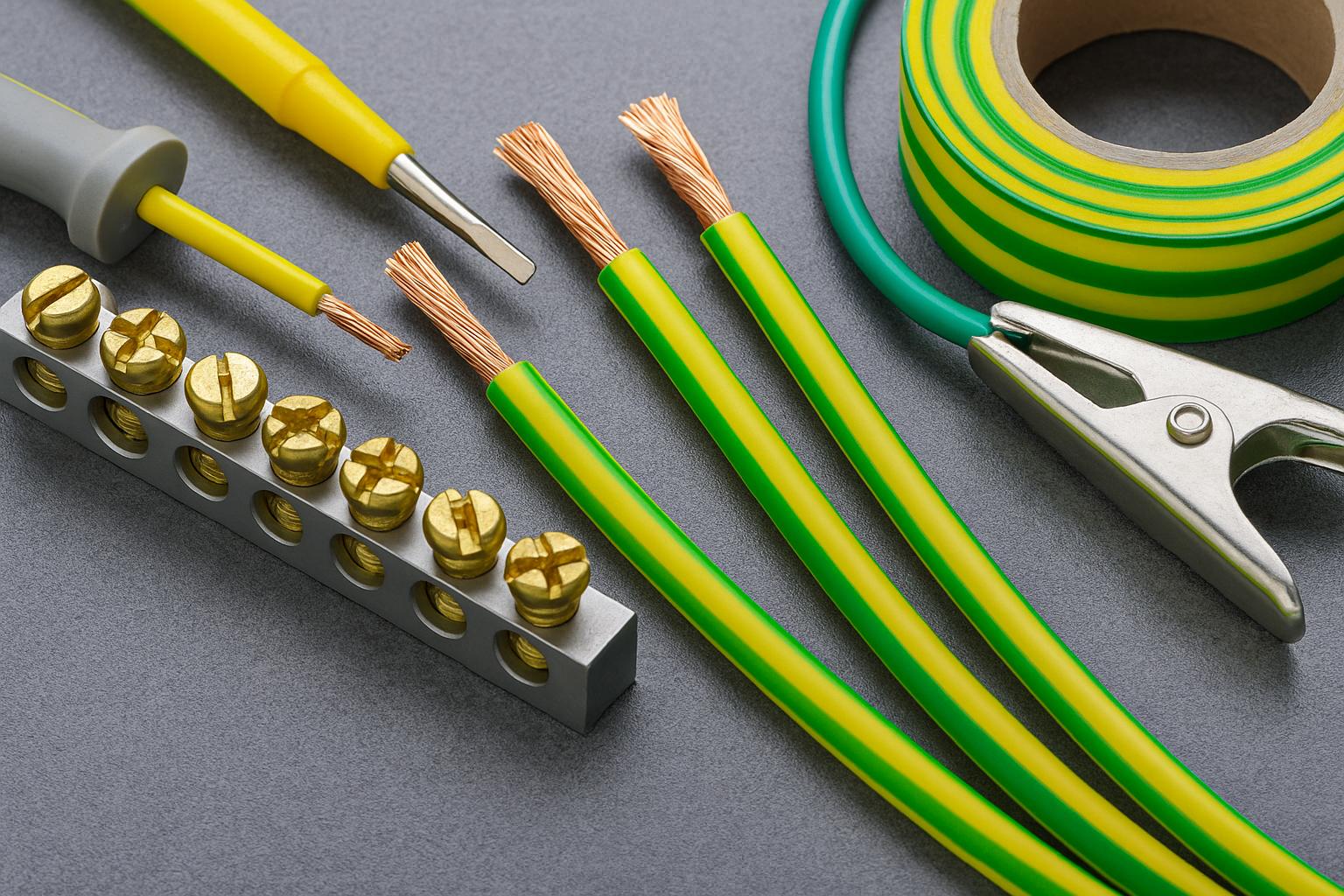
In Gweru, unstable voltage and poor earthing are a big reason for shocks, burnt equipment, and tripping. We test, repair, and install proper earthing and bonding so your system stays safe, stable, and compliant — whether grid, solar, or generator powered.
We start by measuring earth resistance and checking continuity between your DB, neutral, and earth points. Many older houses or workshops in Mkoba, Kopje, and Lundi Park have rusted rods, broken earth wires, or missing bonding to metal pipes and structures — problems that go unseen until there’s damage.
Proper bonding ensures all exposed metal (like geysers, gates, fences, and water pipes) share the same potential, preventing shocks. We fit heavy-duty earth conductors, corrosion-resistant rods, and test the readings until they’re within safe range.
If you use an inverter or generator, correct earthing is even more critical. We design neutral-earth setups that keep your protections (RCDs, breakers) functional under backup power and stop false trips. It’s small detail work, but it matters most when faults occur.
After testing, we document the results, tag the rods, and advise on any surge protection improvements. You get a system that behaves predictably and protects your family, tenants, or staff from dangerous voltages.
We work across Gweru — CBD, Mkoba, Ascot, Lundi Park, Nashville, and Northlea — keeping homes, offices, and small industries safely grounded.
Fix My Earthing or Bonding (Gweru)
Share your suburb (e.g., Mkoba, Ascot, Lundi Park, Nashville, Northlea) and a short description of the issue (e.g., “electric shocks on taps,” “generator earthing check”).
FAQs
Why is earthing so important in Gweru homes and businesses?
Because it gives stray current a safe path to ground. Without it, metal surfaces become live during faults, causing shocks or fire. Proper earthing also helps equipment and inverters handle power fluctuations common in Gweru’s supply.
What’s the difference between earthing and bonding?
Earthing connects electrical systems to the ground, while bonding joins all exposed metalwork (like pipes, tanks, gates) together so they stay at the same voltage. Together, they prevent shocks and equipment damage.
Can I reuse my old earth rods?
Sometimes, if the readings are still low and the connections aren’t corroded. But many older installations in Gweru used undersized rods or poor joints. We’ll test first — if resistance is too high, we’ll replace with modern, corrosion-proof rods.
Do I need separate earthing for my inverter or generator?
Usually yes. Backup systems often need their own neutral-earth link and dedicated rod to make RCDs and surge protection work properly. We test each source (ZETDC, inverter, generator) and configure earthing safely for all.
How often should earthing be tested?
At least every two years, or after major electrical work. Zimbabwe’s soils, especially around Southdowns and Mkoba, can dry or corrode rods faster, increasing resistance. Regular checks keep systems safe and effective.
Do you cover Ivene and Windsor Park too?
Yes. We service CBD, Mkoba, Ascot, Lundi Park, Southdowns, Ridgemont, Nashville, Ivene, Windsor Park, and nearby areas. Share your suburb and issue — we’ll confirm the earliest visit.
Check or Upgrade Your Earthing
Send your suburb and a short description (e.g., “RCD tripping in Lundi Park” or “shock on geyser in Mkoba”). We’ll reply with test scheduling and recommendations.